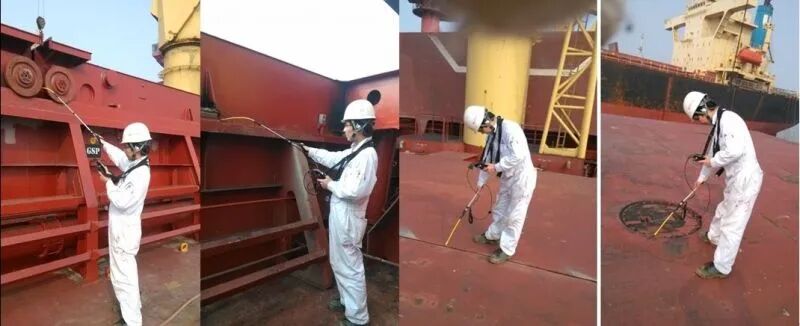
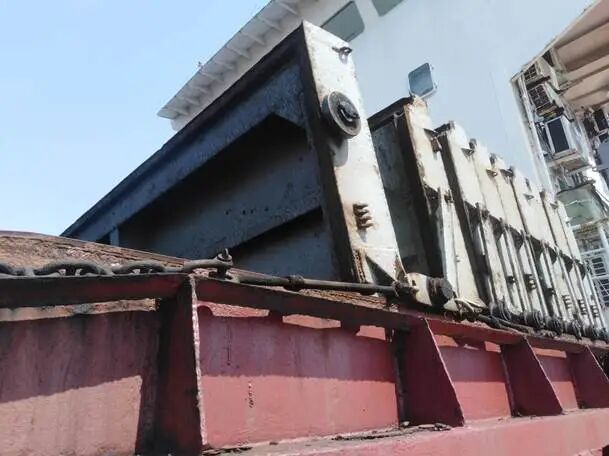
Hatch covers are essential for maintaining a ship’s watertight integrity. If they are compromised, both the ship’s seaworthiness and its cargo-worthiness are at risk. In short, a faulty hatch cover means a risky voyage and potential damage to the goods inside.
1. Key Regulations
The design and maintenance of hatch covers are governed by several international standards:
- IACS UR S21 & UR S30: These focus on design. UR S21 requires reinforced forward hatch covers to withstand “green water” loads and adds 2mm to steel thickness to account for corrosion. UR S30 specifically addresses hatches No. 1 and No. 2 to resist heavy wave loads.
- MSC.169(79): Requires shipowners to include hatch cover maintenance in their Safety Management System (SMS).
- Load Line Convention (Reg. 16.4): States that weathertightness must be maintained in all sea conditions, verified through initial, annual, and periodic inspections.

Technical Requirements for Testing
- Ultrasonic Testing (UT): According to IACS UR Z17, equipment must be Class-approved, and operators must be manufacturer-trained.
- Hose Testing: Per UR S14, the water pressure must be at least 0.2MPa, with a 12mm nozzle kept at a maximum distance of 1.5 meters.
2. Statutory vs. Onboard Inspections
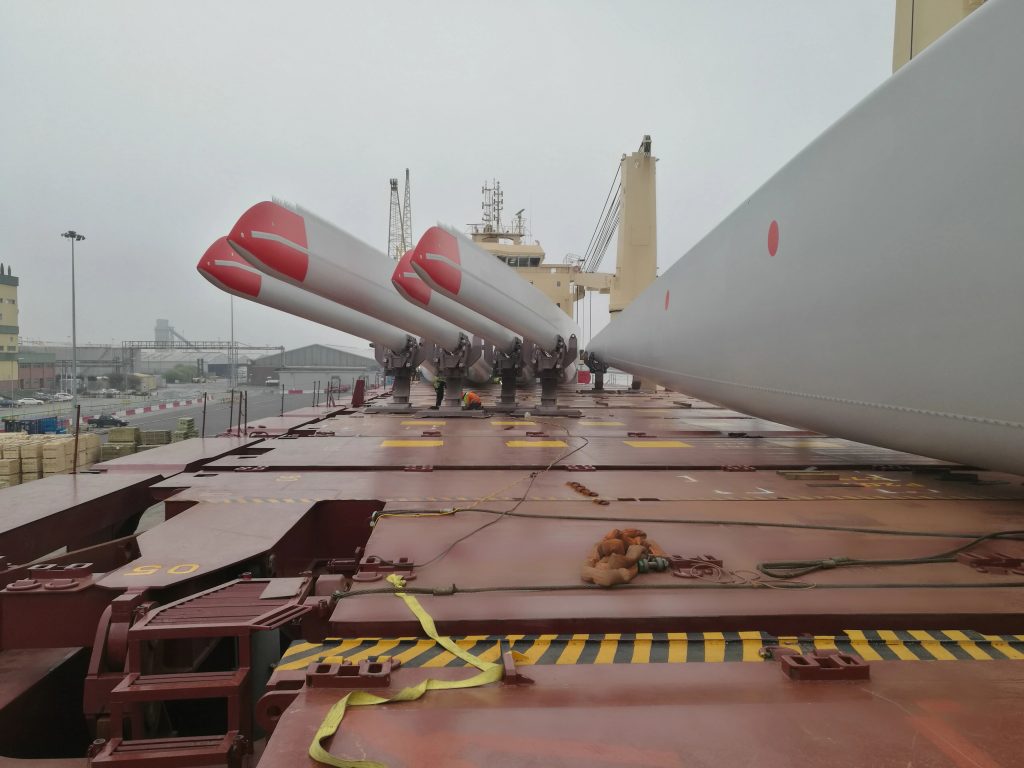
Statutory Surveys are conducted by authorities during annual surveys under the 1966 Load Line Convention. However, safe operations depend on the Crew’s Routine Checks.
At sea, the crew should inspect hatch covers at least once a week, especially before and after heavy weather. Special attention should be paid to the forward 25% of the ship’s length, as this area faces the highest wave impact. 🚢
3. Why Do Hatch Covers Fail?
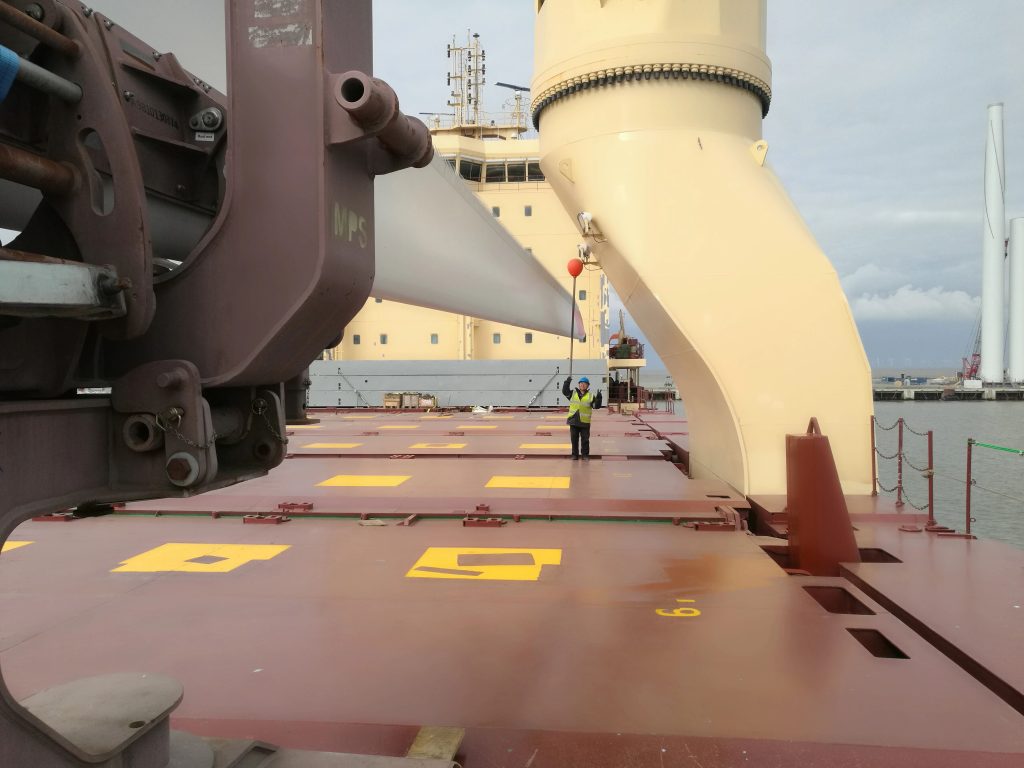
According to MSC/Circ.1071, failures usually stem from:
- Normal Wear & Tear: Deformations from collisions, worn-out friction pads, or damaged cleats (extending devices).
- Lack of Maintenance: Corrosion due to paint failure, lack of lubrication on moving parts, or using the wrong specifications for rubber seals.
4. Common Testing Methods
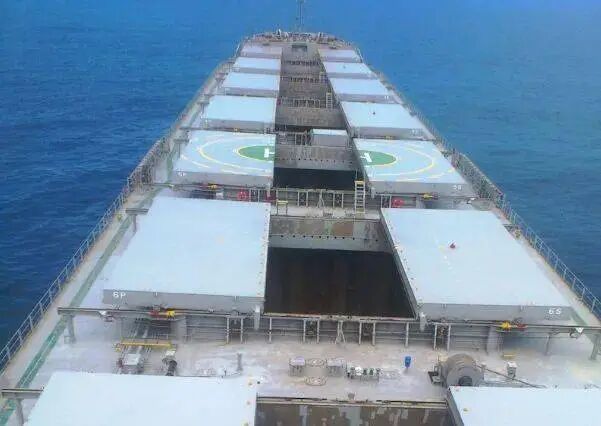
When a ship is on-hire, several tests can determine if the hatches are tight:
- Visual Inspection: Looking for cracks, deformations, or missing parts. It’s a good start but can’t confirm a perfect seal.
- Light Test: A simple method where someone inside the dark hold looks for light leaking through the gaps.
- Hose Test: Spraying the joints with high-pressure water (0.2MPa) from 1 meter away. If the inside of the hold stays dry, it passes.
- Chalk Test: Coating the compression bar with chalk and closing the hatch. A gap in the chalk line on the rubber seal indicates a potential leak. It’s easy but not always accurate.
- Ultrasonic Test (UT): The most modern and reliable method. An ultrasonic transmitter is placed inside the hold. If the receiver outside picks up more than 10% of the internal sound value (OH), the seal is considered defective. 🛠️
Conclusion
For a ship to be legally “seaworthy,” the hatch covers must be weathertight at the start of the voyage. If cargo damage occurs during a storm, the owner can only avoid liability by proving they exercised due diligence through documented maintenance and testing.
Remember, tests like Hose or UT are performed in static port conditions. They cannot perfectly simulate the twisting and shaking of a ship in a real storm. Therefore, consistent, everyday maintenance is the only true way to ensure your cargo stays dry.